How residents in Melbourne are organizing to save public housing
In 2023, during a press conference, the Victorian state government in Australia announced their intention to demolish all of Melbourne’s 44 public housing high-rise flats. The 10,000, mostly working-class, multi-racial residents had not been informed of these plans, and the government failed to produce evidence justifying their decision, which has been described as an attempt to privatize housing. Relocations have already begun.
A few organizers started meeting with residents to stop evictions and demolitions. They wanted to defend quality public housing by mobilising majorities, to build the kind of power needed to stop these plans. In 2024, they founded 44 Flats United.
Laying the groundwork: building unity
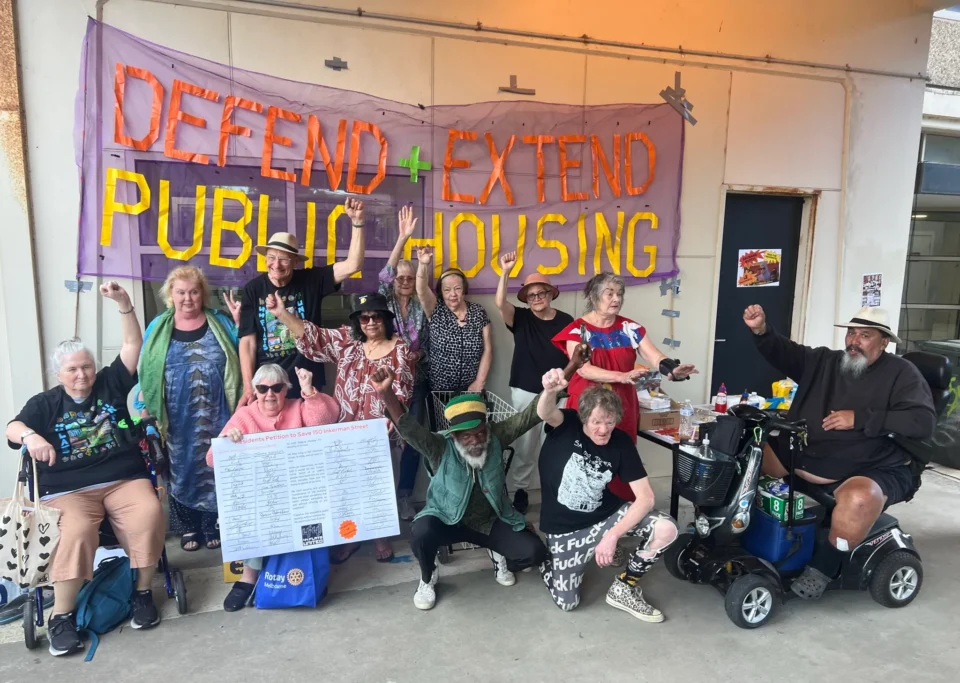
Organizers had attended our trainings, and started applying the methods we teach. They started knocking on doors to meet with residents and understand how they were feeling about the announcements. Unsurprisingly, a majority of residents didn’t want to move. Organizing committees were set up across six estates, and organizers started thinking about how to escalate actions strategically with Plans to Win.
They started charting entire blocks: making lists of people within their structure to map areas and track participation in actions.
The next step was a first public action: a majority petition to demonstrate the unity of residents. This common organizing tool is a petition that is only published when a majority of people in the organizing structure support it. This helps convince more fearful residents to sign on: there is strength in numbers.
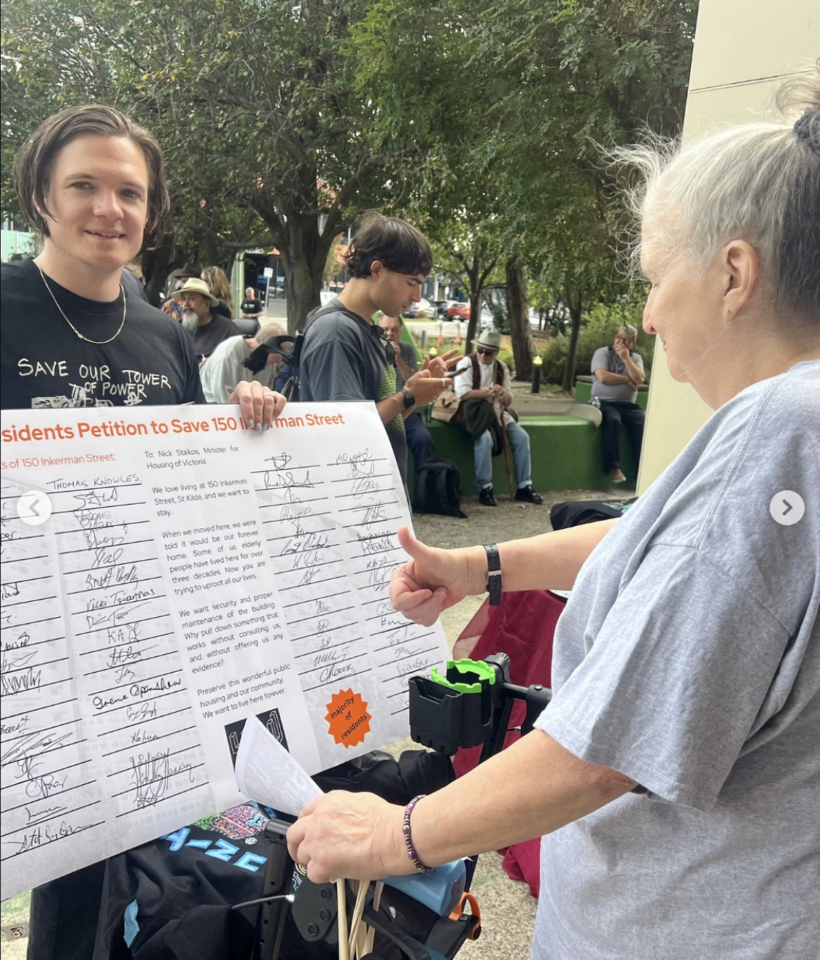
Little by little, residents started taking ownership of the campaign, with some signing up entire floors. Once organizers hit a majority of 60% in the first tower, they printed out a big poster with residents’ signatures and shared it throughout the building.
They also elected a residents committee, declaring they would not not cooperate with attempts to evict them. This built momentum and inspired other buildings to start organizing as well.
A second tower followed suit a few weeks later, publishing their own petition, with 70% of residents protesting planned demolition. “It’s been really enlightening. Action is a fantastic thing to address fear”, said Tom, a resident and organizer.
The next structure test invited residents to put up ‘Declarations of Non-Cooperation’ with the displacement process on their door, and to send letters to the government agency informing them of their non-cooperation.
In the first two high-rises to reach majority on their petitions, around half of the residents have done so. Declarations are going up in two other buildings as well.
Two new victories in the campaign
Since sharing their progress with us in May, the campaign has achieved new victories. Following the election of the committee in one of the buildings, several residents shared security concerns after break-ins. A letter was written to the housing agency in June demanding a security team, warning them of consequences if no action was taken within seven days. Three days later, a 24/7 security team was on site.
In July, residents also took charge to rid their tower of pests. For years, residents had lived in unsanitary conditions, with bedbug and mice infestations, with no solutions offered. When a formal letter to the agency went unanswered, residents took matters into their own hands, treated the building, and sent them the bill. The agency subsequently wrote to every resident announcing that a new pest control company was being brought in to deal with the situation, showing once again the power of unity and organization.
Over 50 residents from 5 buildings have come together for a cross-estate assembly, and a similar number marched to hand in the majority petitions to representatives from the state government.
The campaign is now entering a community and power mapping phase, to activate a broader base of community support and turn this campaign into a city-wide issue to precipitate a political crisis for the premier and housing minister.
Watch organizers present their campaign during our last training: